
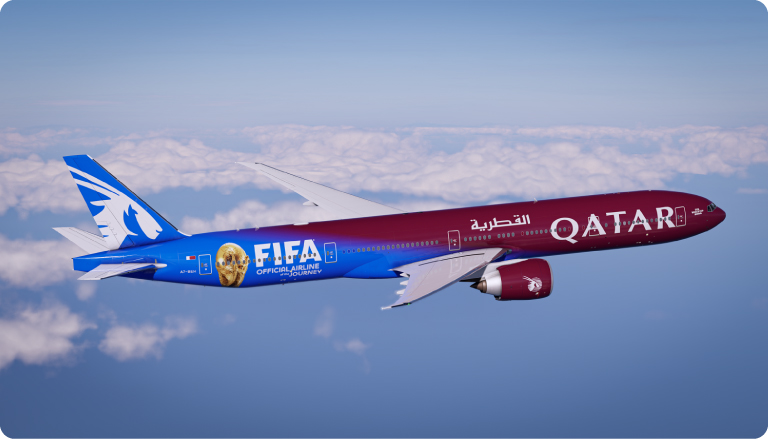
- Airlines are expanding their sponsorship investments as travel demand and competition grow
- Major sports partnerships strengthen brands and attract passengers
- Beyond commercial returns, governments seek international reputation and influence
English football has set a new record with the most expensive shirt sponsorship deal in Premier League history.
It’s not a crypto company or a betting brand. It’s an airline.
Liverpool have announced a deal with Turkish Airlines worth an estimated $400 million over five years.
Why have airlines become even more relevant in sports sponsorship in recent years?
The sponsorship industry has gone through major cycles over the past few decades.
Consumer brands such as Coca-Cola, Budweiser and McDonald’s gained global visibility through major events.
Airlines and international conglomerates such as Emirates, Qatar Airways and Wanda Group strengthened their positioning and credibility in new markets.
Digital platforms such as Airbnb, Google, Just Eat and Booking began connecting the online and offline worlds to improve the fan experience.
More recently, crypto, betting, luxury and fintech brands such as Binance, Betano, Louis Vuitton and Revolut have conquered more space.
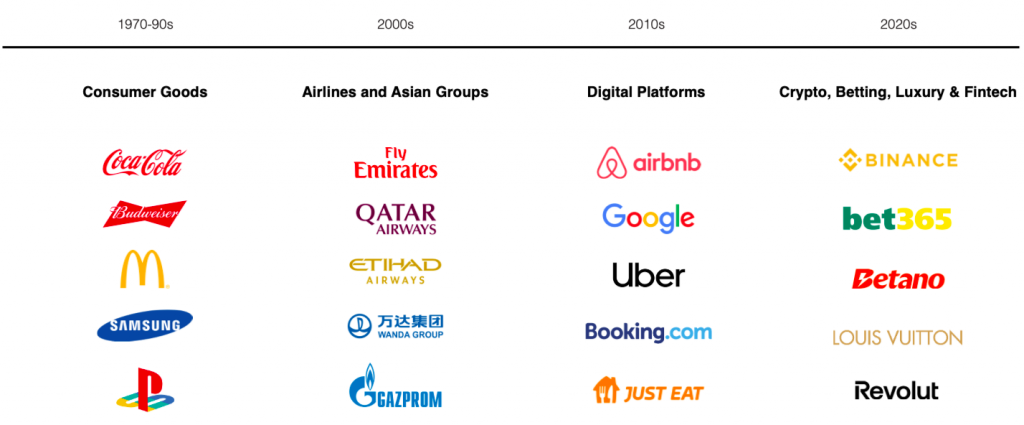
Each wave reflects changes in society, as well as sponsorship’s ability to serve different business objectives.
Today, airlines, which gained momentum in sport during the 2000s, have established themselves among the industry’s biggest investors following the pandemic.
The post-pandemic recovery boosted demand for travel, particularly international travel, and increased global competition.
The return of major events also created opportunities to promote routes and build customer loyalty.
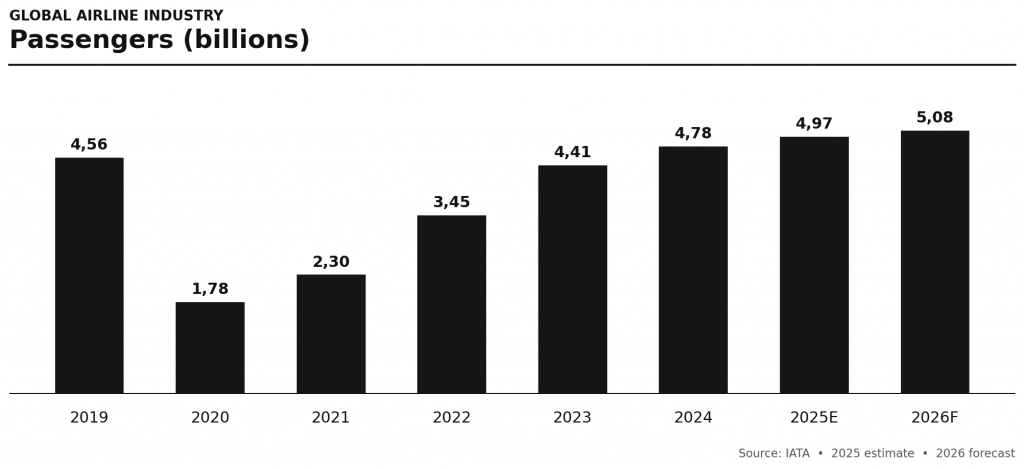
According to IATA, the industry nearly doubled its passenger numbers from 2.3 billion in 2021 to 5 billion in 2025.
But what do these companies sponsor?
Football has been one of their main territories, with partnerships involving some of the world’s biggest sports properties.
Emirates sponsors Real Madrid and Arsenal. Etihad Airways has a presence at Manchester City. Qatar Airways sponsors the World Cup and the Champions League.
Emirates pays Real Madrid around $100 million a year (SportsPro).
And their presence goes far beyond football.
Qatar Airways sponsors Formula 1 and MotoGP. Emirates is a global partner of the NBA and the ATP Tour. Riyadh Air invests in Atlético de Madrid and LIV Golf.
But the presence of airlines in sport cannot be explained only by growing travel demand, competition and commercial returns.
There is another important factor: geopolitics.
Many of the airlines behind the biggest sponsorship deals are government-controlled, helping to strengthen what is known as soft power.
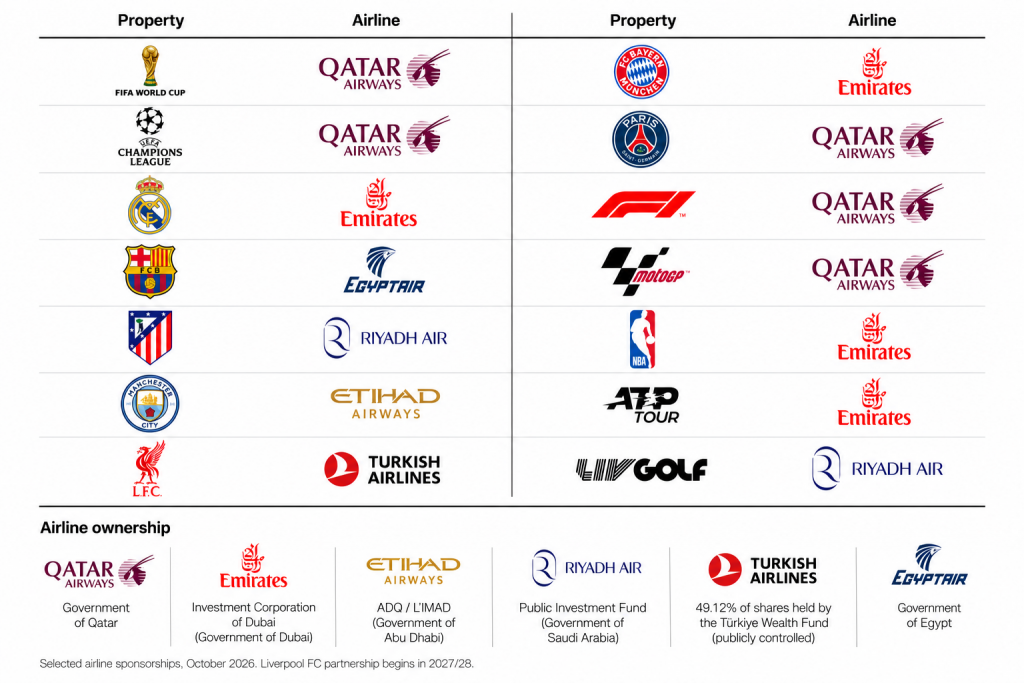
These countries and governments are not just competing for passengers.
They also want to attract investment, businesses and talent. Develop their airports into major international hubs and strengthen their global reputation and influence.
Turkish Airlines’ move is particularly interesting given the competition from Emirates, Qatar Airways, Etihad and Riyadh Air, all controlled by governments in the Gulf region.
A study published in 2024 in the International Journal of Sports Marketing and Sponsorship found that Qatar Airways’ partnership with FC Barcelona had a positive impact on Qatar’s reputation in Spain.
It is difficult to measure the extent to which geopolitics drives each of these major deals.
But sports sponsorship can generate value beyond an airline’s commercial performance.
While airlines compete for passengers, the countries behind them also compete for influence.
Receive my content